Water Softeners and Water
Hardness Testing
In Buda, TX
Understanding Water Hardness and Its Impact on Plumbing Systems
When we talk about “hard water,” we aren’t talking about ice—we’re talking about water packed with invisible dissolved minerals, primarily calcium and magnesium. While completely safe to drink, hard water is quietly one of the toughest opponents your home’s plumbing system can face.
Every time hard water heats up or evaporates, it leaves behind a chalky, rock-hard residue known as limescale. Over time, this scale builds up inside your pipes, restricting water flow and lowering water pressure.
The damage doesn’t stop there. Limescale acts like an insulating blanket inside your water heater, forcing the system to work twice as hard to heat your water. This dramatically spikes your energy bills and can cut your water heater’s lifespan in half. You’ll also notice hard water on the outside: crusty white buildup on faucets, sluggish dishwashers, and soap that refuses to lather.
At Garrison Plumbing LLC, we believe in protecting your investment. If you are dealing with dry skin, stiff laundry, or fading water pressure, your plumbing might be under attack from hard water. Contact us today to test your water and explore reliable solutions, like professional water softeners, to keep your system running smoothly.


The Role of Water Softeners in Combatting Hard Water
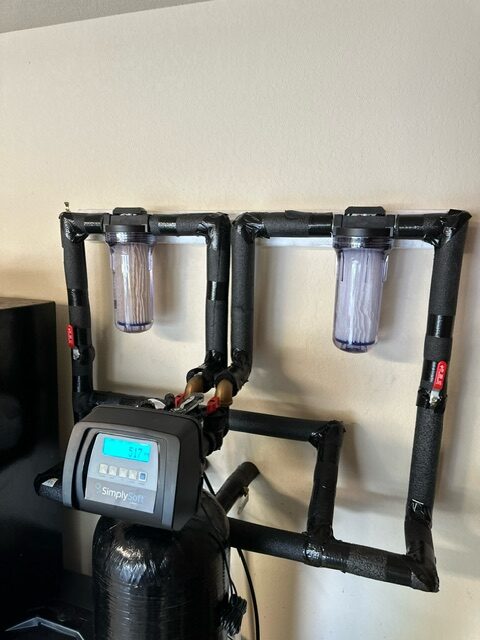
A water softener is your plumbing system’s best line of defense against mineral damage. These systems work through a scientific process called ion exchange: as hard water enters your home, it passes through a tank filled with resin beads. These beads attract and trap the troublesome calcium and magnesium ions, swapping them for harmless sodium ions.
By removing these minerals before they reach your taps, a water softener completely eliminates limescale buildup. This protects your pipes from clogging, extends the lifespan of your water heater, and keeps appliances running efficiently—saving you from costly, premature plumbing repairs down the road.
How to Test for Water Hardness and Choose the Right Water Softener
Discovering if you have hard water is the first step toward protecting your plumbing. You can start with a simple DIY kit from a home improvement store, which uses test strips to measure grains per gallon (GPG). However, a professional water test offers the most accurate blueprint of your water’s mineral and iron content.
Choosing the right water softener depends on your household’s size, daily water usage, and the exact hardness level of your local water supply. Systems are rated by grain capacity—the amount of hardness they can remove before regenerating. At Garrison Plumbing LLC, we help you skip the guesswork by accurately testing your water and sizing the perfect system for your home.
Reverse Osmosis Installation
Introduction to Reverse Osmosis
Reverse osmosis is a water purification method that uses a semi-permeable membrane to filter out impurities from water, providing clean and safe drinking water. It’s effective in removing contaminants like salts, bacteria, and chemicals, and is widely used in both homes and industries. This results in high-quality water free from unwanted particles.
Key Considerations Before Installing a RO System
It provides practical advice on testing for water hardness and selecting an appropriate water softener. It outlines various methods for testing water hardness, including at-home testing kits and professional assessments. The importance of accurately determining water hardness levels to choose the right water softener for a specific plumbing setup is emphasized.
Step-by-Step Guide to RO Installation
The final section provides step-by-step guide to installing a reverse osmosis system. It covers the entire installation process, from preparing the installation site and gathering necessary tools to connecting the system to the water supply and drain lines. It includes instructions on installing the RO membrane and filters, mounting the system, and performing installation.
Here are 5 Questions & Answers we get from our Customers
1. What is water hardness and why should I be concerned about it?
Water hardness refers to the amount of dissolved calcium and magnesium in your water supply. Hard water can cause scale buildup in pipes and appliances, reduce soap efficiency, leave spots on dishes and fixtures, and lead to dry skin or hair. Over time, untreated hard water can shorten the lifespan of plumbing systems and water-using appliances, resulting in costly repairs or replacements.
2. How can I tell if I have hard water in my home?
Common signs of hard water include white mineral deposits on faucets and showerheads, soap not lathering well, spots on glassware, stiff laundry, and dry or irritated skin after bathing. However, the most accurate way to determine water hardness is through a professional water hardness test, which measures the concentration of minerals in grains per gallon (GPG) or parts per million (PPM).
3. What does a water softener do and how does it work?
A water softener removes hardness-causing minerals—primarily calcium and magnesium—through a process called ion exchange. Inside the softener, resin beads capture these minerals and replace them with sodium or potassium ions. The system periodically regenerates by flushing the beads with a saltwater solution, preparing them to continue softening water efficiently.
4. Is installing a water softener worth it for my household?
Yes—especially if your water tests as moderately to severely hard. A water softener can improve the efficiency of water heaters, protect plumbing and appliances, enhance soap and detergent performance, and lead to softer skin and shinier hair. It’s an investment that pays off through lower energy bills, longer-lasting appliances, and reduced maintenance costs over time.
5. How often should I test my water for hardness, and can I do it myself?
It’s a good idea to test your water annually, especially if you notice changes in water quality or have installed new appliances. DIY test kits are available at most hardware stores, but for the most accurate and detailed results, we recommend a professional water test. Our team provides comprehensive testing services and can recommend the best water treatment solution based on your water’s specific composition.